
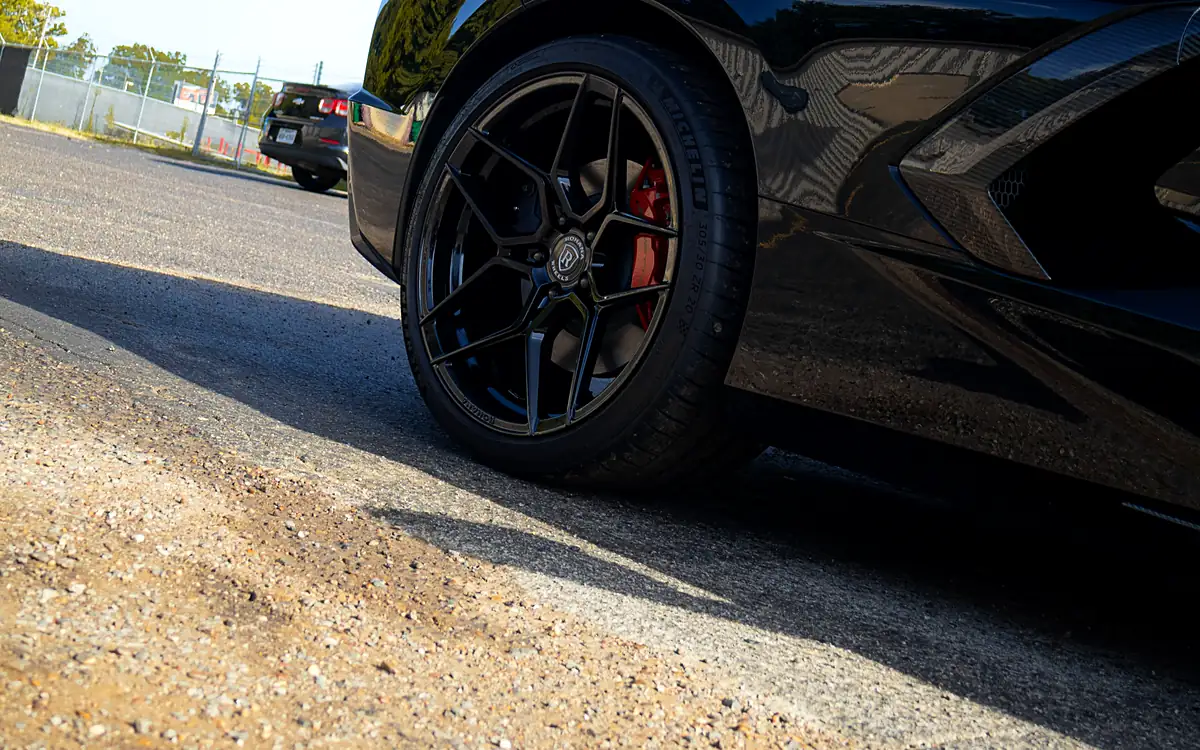
A steering wheel that shakes only when you brake almost always points to the front brake rotors. The rotor surface has worn unevenly, so the pads grab and release as it spins, and you feel that pulse through the wheel. New rotors and pads usually fix it. A worn front-end part can make it worse.
We do brakes, alignment and suspension at our Tyler and Longview shops, so a shake gets one diagnosis instead of a referral. A brake inspection takes about 30 minutes.
Why does my steering wheel shake when braking?
Your steering wheel shakes when braking because the front rotors have developed thick and thin spots. Each time a high spot passes through the caliper, the pads push back, and that rhythm travels up the steering column into your hands. The faster you're going when you brake, the harder it shakes.
It usually starts small, a faint buzz coming down an off-ramp. Then one day you brake hard on I-20 and the wheel does a little dance like it heard its favorite song. That's the rotors asking for attention.
| What you feel | Most likely cause |
|---|---|
| Steering wheel shakes only when braking | Front rotors with uneven thickness |
| Brake pedal pulses only when braking | Rotors, front or rear |
| Shake at highway speed, braking or not | Tire balance or a tire problem |
| Shake plus a pull when braking | A sticking caliper or a worn front-end part |
| Clunk or shimmy over bumps too | Worn suspension or steering parts |
Warped rotors, or something else?
Everyone calls it warped rotors, and almost everyone is wrong about the warping. Rick Muscoplat, an ASE-certified mechanic, notes that "street vehicle brakes generally cannot generate enough heat to permanently warp a cast-iron brake rotor." What actually happens is uneven thickness.
The rotor wears or picks up pad material unevenly, and as Muscoplat puts it, the rotor "develops slightly thicker and thinner areas around its circumference." The pads hit those spots like a pickup hitting the same pothole on every lap.
You don't have to care what it's called. "Warped rotors" gets you the right repair at any counter in Texas, and I'm not going to correct anybody who says it. The fix is the same.
Other causes of shaking when braking
Rotors are the usual cause, but a sticking caliper, worn suspension parts, loose wheel bearings or wheels that weren't torqued evenly can cause or worsen a shake under braking. If the steering wheel also shakes at speed without braking, the tires or wheel balance are likely involved too.
Lug nut torque is the sneaky one. Muscoplat points out that "improper lug nut torque can distort rotor mounting alignment", which starts the whole uneven-wear cycle. That's why we torque wheels to spec instead of letting an impact wrench decide how it feels today.
Shaking at highway speed with no brakes involved is a different problem, and we cover it in why your steering wheel is shaking.
Wheel shaking every time you stop? A 30-minute brake inspection finds the rotor, caliper or part behind it. See brake repair in Tyler and Longview.
How a brake shake gets fixed
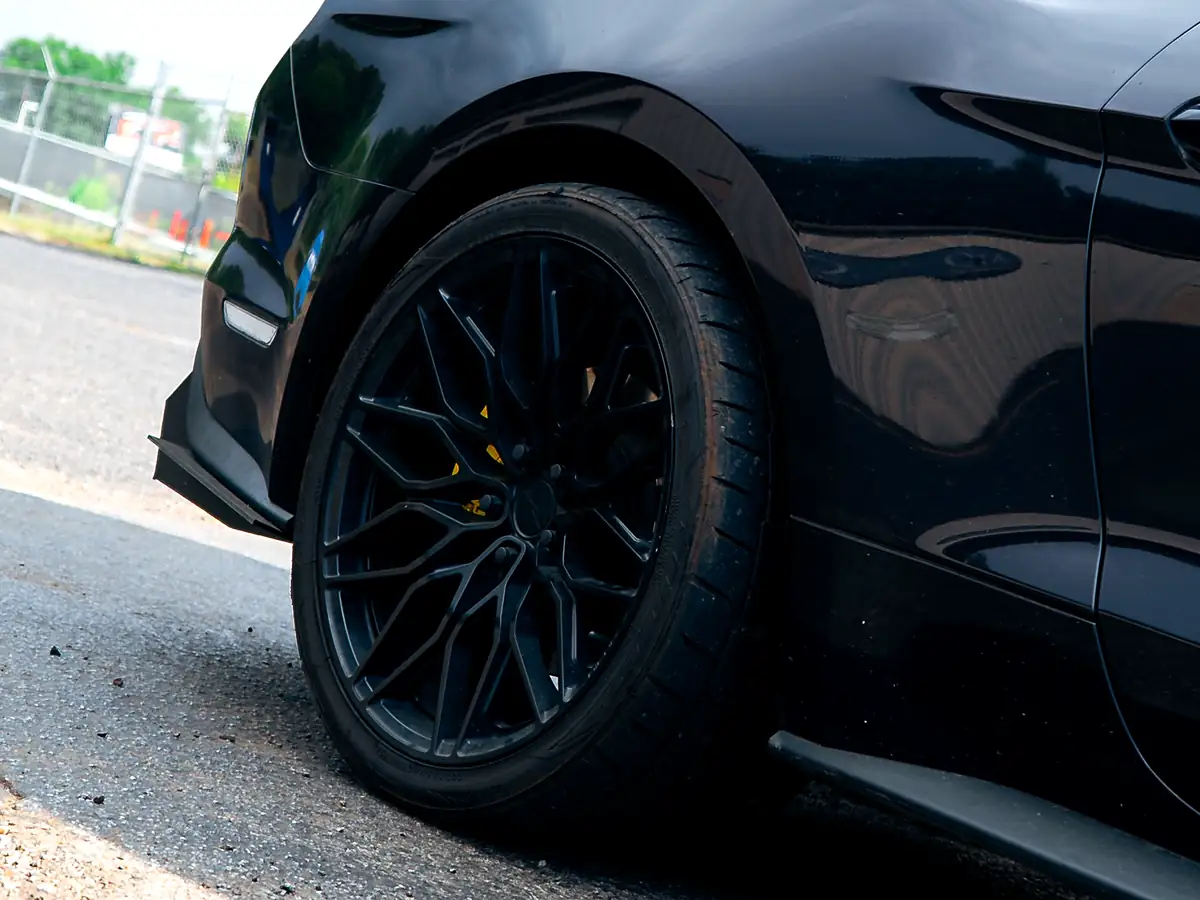
A brake shake usually gets fixed with new front rotors and new pads, installed with the wheels torqued to spec. If the inspection finds a sticking caliper or a worn front-end part, that gets fixed too, or the shake comes back.
- Brake inspection, about 30 minutes: rotors, pads, calipers, lines and fluid.
- Check the front end, because a loose part can mimic or worsen brake shake.
- Replace rotors and pads as a set. Rotor replacement takes about an hour, a full disc brake job about two.
- Torque the wheels to spec so the new rotors start life flat and stay that way.
Brake shake also tends to show up near the end of a pad's life. If yours squeal as well as shake, read how long brake pads last before you book.
Brake shake questions
Is it safe to drive if the steering wheel shakes when braking?
Can bad tires cause shaking when braking?
Can rotors be resurfaced instead of replaced?
Why does my car shake when braking from high speed only?

Make the shake stop. We inspect your brakes first, quote it straight, and torque every wheel to spec. See brake repair in Tyler and Longview, or call Tyler at (903) 500-8557 or Longview at (903) 500-9626.
Read this next How long brake pads last, and the signs it's time