
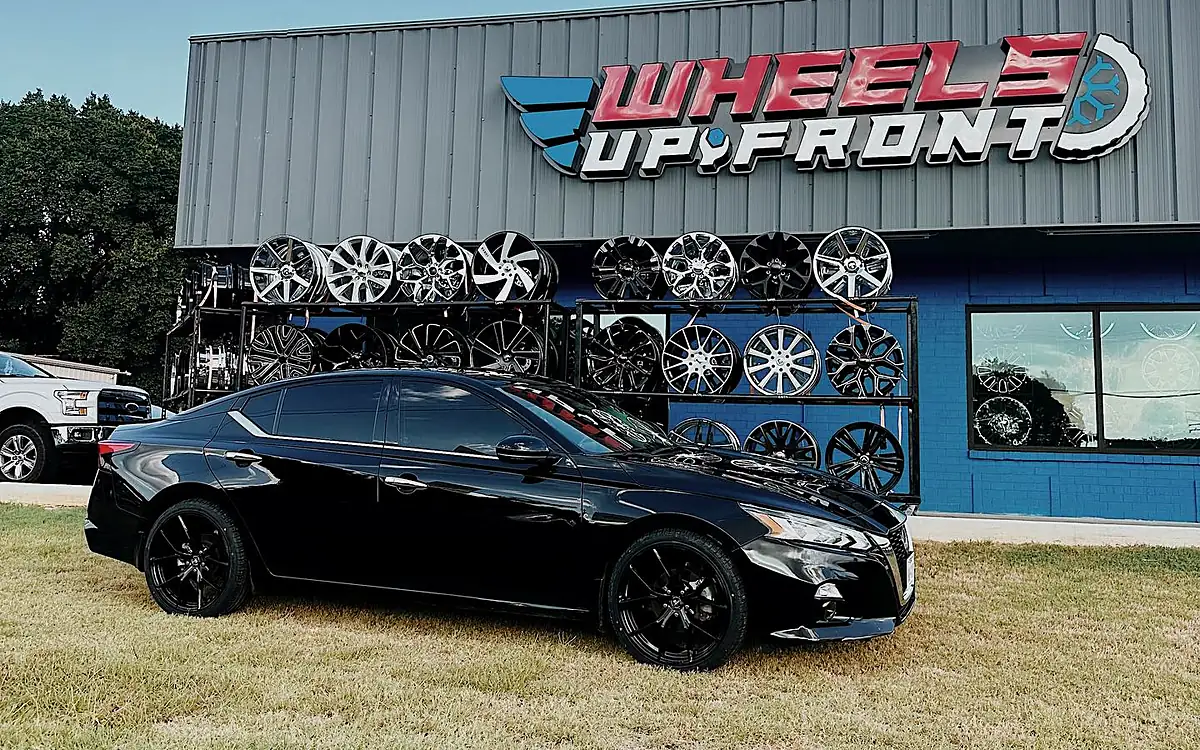
A car usually pulls to the right because of uneven tire pressure, a wheel alignment that's out of spec, or a brake dragging on the right side. If it only pulls when you brake, suspect the brakes. If it drifts slightly right on most roads, the road's crown may be part of it.
We set camber, caster and toe to the manufacturer's spec at our Tyler and Longview shops, and we check the steering and suspension first so a worn part gets found before the angles are set.
Why is my car pulling to the right?
Your car pulls right because something is creating more drag or a different angle on one side. The four usual causes are low tire pressure on the right, an alignment that's out of spec, a sticking brake on the right, or worn steering and suspension parts.
Tire pressure is the cheap one, so check it first. NAPA puts it simply: "If the pressure in your left tire is lower than the right, your car will pull to the left, and vice versa." A gas station gauge costs less than a breakfast taco.
| When it pulls | Likely cause | Quick check |
|---|---|---|
| All the time, every road | Tire pressure or alignment | Set all four tires to the door-sticker pressure |
| Only when braking | Sticking caliper or uneven brake wear | One front wheel hotter or dustier than the other |
| Only on some roads | Road crown | Does it track straight on a flat parking lot? |
| After a pothole or curb | Alignment knocked out, bent part | Steering wheel no longer centered |
| After new tires | A tire pulling on its own | Swap the two front tires and see if the pull switches sides |
Road crown is the sneaky one. Roads are built with a slight slope so rain runs off, and federal guidance calls for a cross slope of at least 1.5 percent on highway lanes. On a crowned road every car drifts a little toward the shoulder, which is to the right. So if your car pulls right on Loop 323 but tracks straight in an empty church parking lot, it might not be your car at all.
Car pulling to the left
A car pulling to the left has the same causes as one pulling right, just on the other side: low pressure in a left tire, alignment out of spec, a dragging left brake, or worn front-end parts. Road crown is the one exception, because it pushes cars right, not left.
So a left pull is actually more telling. The road isn't helping it along, which means something on the car is. That's when you stop blaming the county and start blaming the truck.
Car pulls to the right when braking
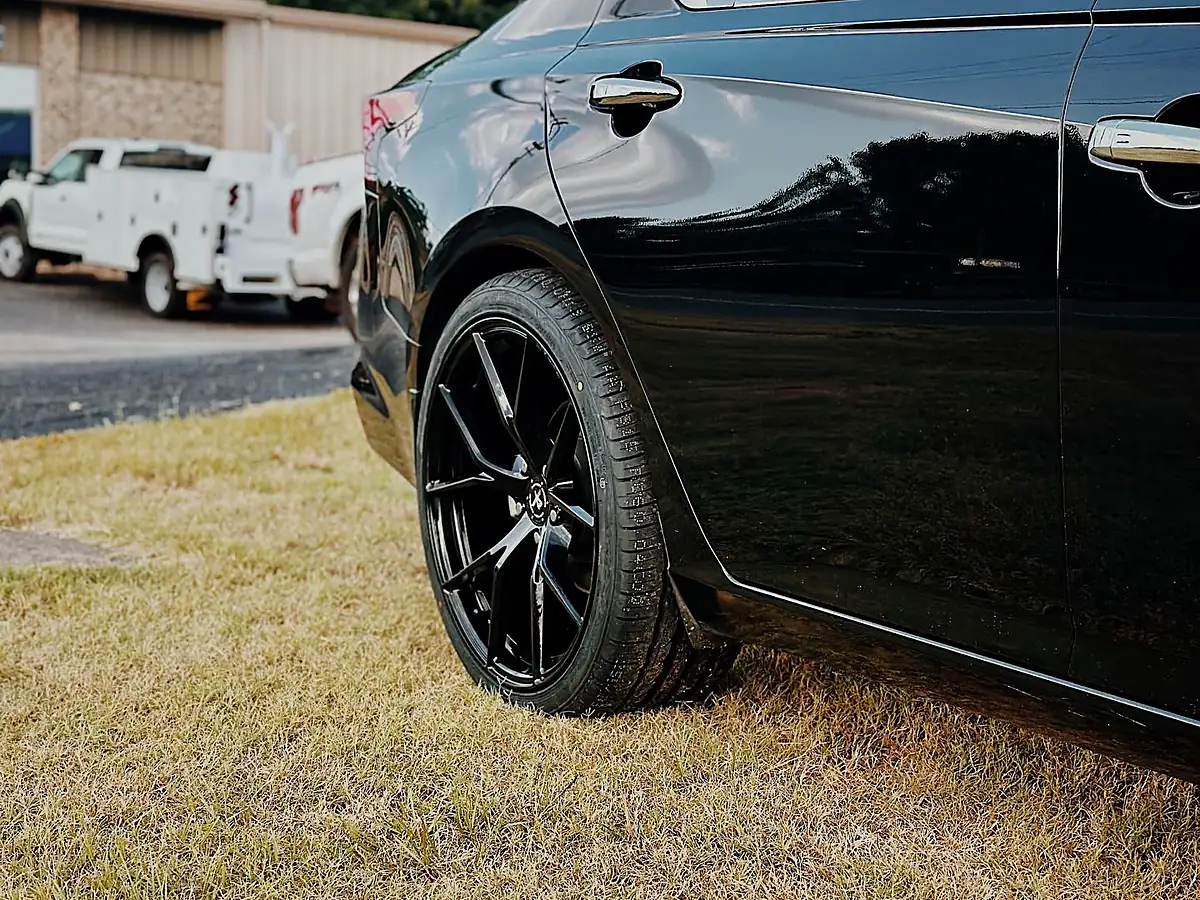
If the car only pulls to the right when you brake, the brakes are almost always the cause. A caliper that's sticking, a pad that's worn unevenly, or a brake hose that's collapsing can make one side grab harder. As MOOG puts it, "uneven friction between the right and left front brakes can cause the steering wheel to pull right or left."
Brake pulls are worth taking seriously. A car that dives sideways in a hard stop is a car that picks its own lane at the worst moment. Our brake inspection takes about 30 minutes and tells you which side is dragging.
Bad alignment symptoms
The clearest signs of bad alignment are a steering wheel that sits off-center while you drive straight, a pull to one side, and tires wearing faster on one edge. You might also feel the steering wander, like the car's trying to change lanes on its own.
- Off-center steering wheel when the car is going straight
- A steady pull that needs constant correction
- Uneven tire wear, especially one edge worn smooth or a feathered feel across the tread
- Wandering on the highway, like steering a grocery cart with one bad wheel
A crooked steering wheel is the one people live with longest. You start holding the wheel at 11 o'clock out of habit and convince yourself that's normal. It isn't, and your tires are quietly keeping score.
Steering wheel crooked or tires wearing on one edge? We measure the alignment first and quote it straight. See our wheel alignment in Tyler and Longview.
How to tell if you need an alignment
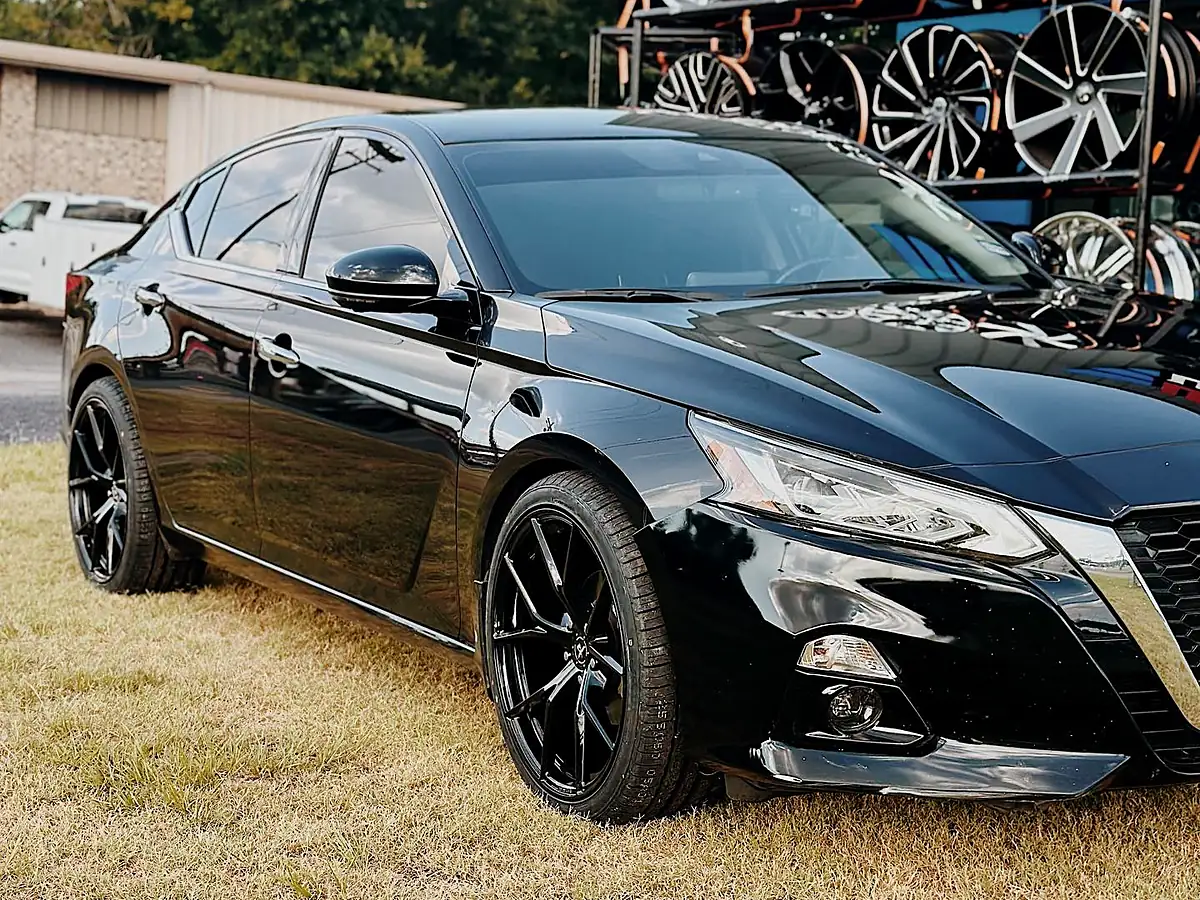
You probably need an alignment if the car pulls with correct tire pressure, the steering wheel is off-center, or the tires are wearing unevenly. You also need one after new tires, a lift or level, a curb hit that rattled your teeth, or any steering and suspension repair.
- Set the tire pressure to the number on the driver's door sticker, not the number on the tire.
- Test on a flat, empty lot at low speed. Let go of the wheel for a second. Does it track straight?
- Look at the front tires. Is one edge smoother than the other?
- Brake gently in a straight line. A pull that only shows up here is a brake problem.
If the pull survives all four, it's time for a shop. Worn parts come first, then the angles: MOOG notes that worn steering and suspension parts can cause a pull on their own, and no alignment can fix a loose tie rod.
How we find the pull
The first question that matters is when it pulls: all the time, only on the brakes, or only on certain roads. That one answer cuts the list in half before anybody lifts the car.
Then we check the steering and suspension, because a worn part found after the alignment means paying for the alignment twice. Only then do we set camber, caster and toe to the manufacturer's spec. We do alignments, brakes and suspension at both shops, so a pull gets one diagnosis instead of a referral across town.
Pulling questions
Is it safe to drive a car that pulls to the right?
Can tire pressure make a car pull?
Does an alignment fix pulling?
Why does my car pull right after new tires?
Still pulling? We check the steering and suspension first, then set camber, caster and toe to spec. Book a wheel alignment in Tyler or Longview, or call Tyler at (903) 500-8557 or Longview at (903) 500-9626.