
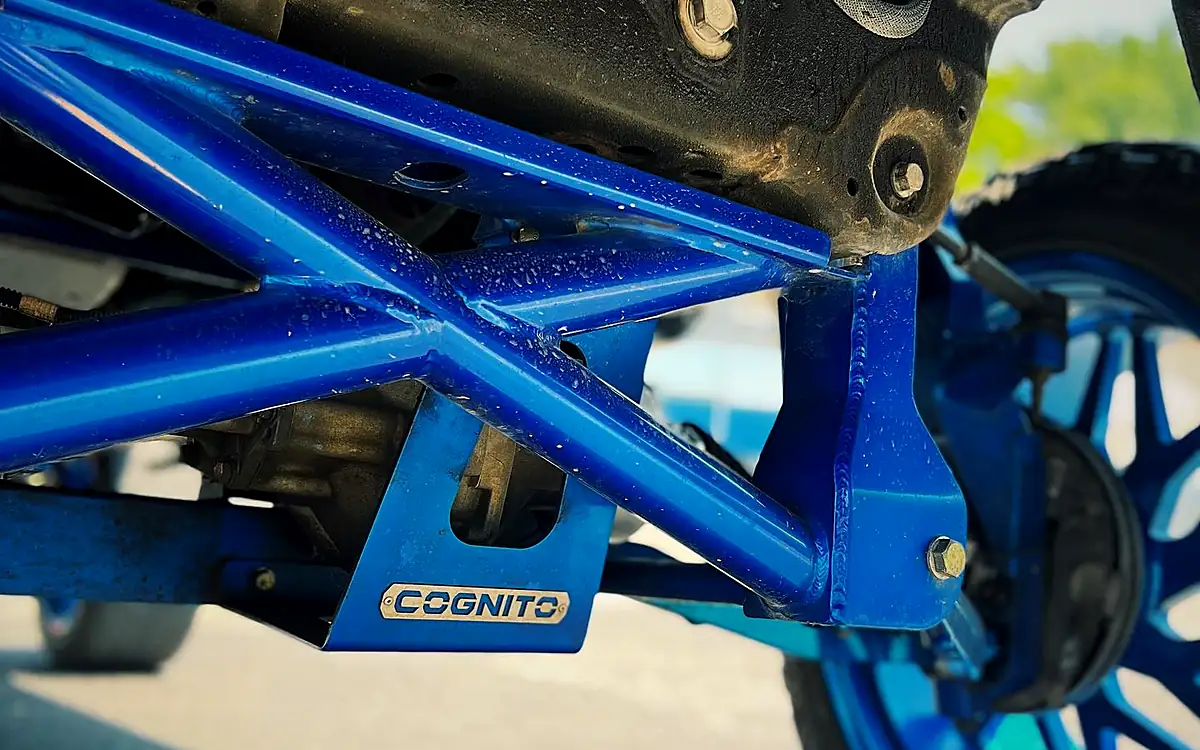
A shock absorber only controls bounce. A strut does that job too, but it's also a structural part of the suspension that holds the spring and keeps the wheel aligned. Most vehicles use struts up front and either shocks or struts in the rear. Monroe says to have them inspected around 50,000 miles.
We replace shocks and struts at our Tyler and Longview shops on cars, trucks and lifted rigs. A suspension inspection takes about 30 minutes, and shocks or struts take about two hours.
What's the difference between shocks and struts?
A shock absorber controls how fast the springs move, so the vehicle doesn't keep bouncing after a bump. A strut does that too, but it's also part of the structure. Monroe explains that struts "provide structural support for the vehicle suspension, support the spring, and hold the tire in an aligned position."
Here's the easy version. Pull a shock off and the truck still stands there on its springs, just bouncier. Pull a strut off and that corner of the car sits down on the ground like a tired dog. That's also why strut work usually means an alignment afterward, and shock work usually doesn't.
| Shock absorber | Strut | |
|---|---|---|
| Main job | Controls spring and suspension movement | Controls movement and holds up the suspension |
| Holds the spring | No | Yes |
| Affects alignment | No | Yes, alignment after replacement |
| Where you find it | Rear of many trucks, all four on some | Front of most cars, SUVs and many trucks |
| Our job time | About 2 hours | About 2 hours |
How long do shocks last?
Shocks and struts wear gradually, so there's no single mileage where they fail. Monroe's guidance is to have them inspected once a year, and to take a close look once they've been in service around 50,000 miles. Towing, heavy loads, ranch roads and big tires wear them faster.
The trouble is that they wear so slowly you adapt. You don't notice the ride getting worse any more than you notice yourself getting older, until one day a passenger asks why the truck handles like a waterbed on a trailer.
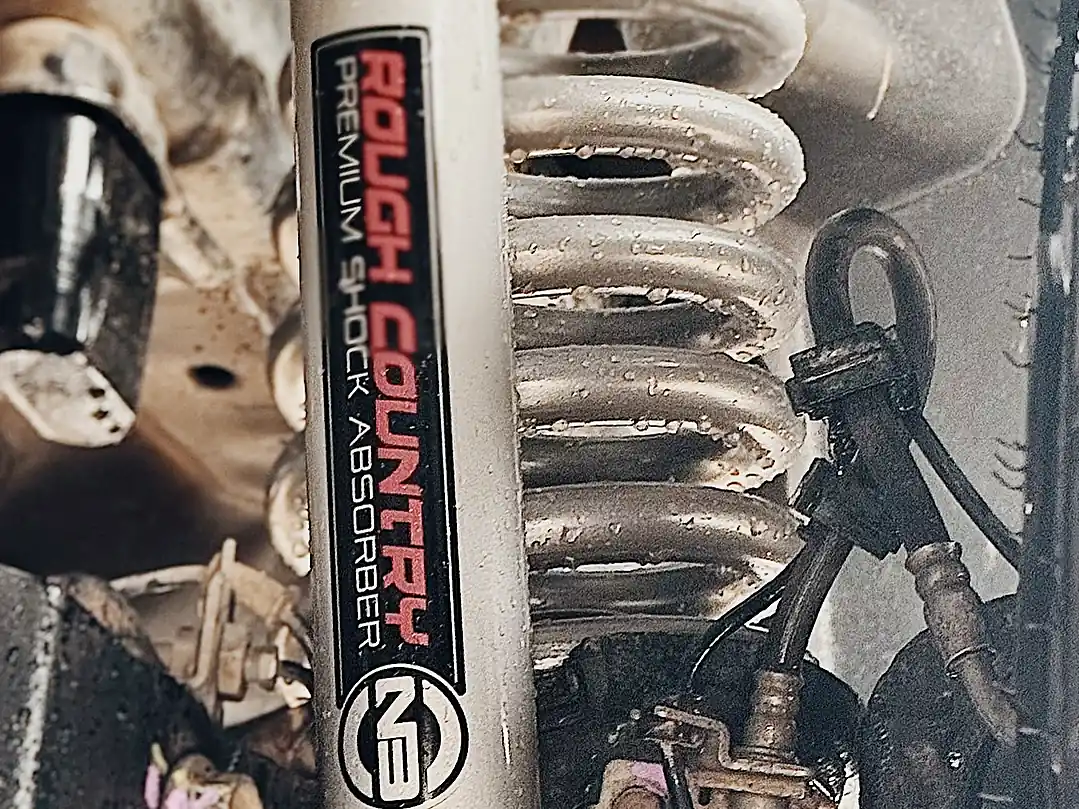
Bad shocks symptoms
The clearest bad shocks symptoms are a truck that keeps bouncing after a dip, a nose that dives hard when you brake, a rear that squats when you accelerate, and tires wearing in a cupped, scalloped pattern. Fluid leaking down the outside of a shock is another giveaway.
- Bouncing or floating after bumps and dips
- Nose dive under braking
- Squat when you accelerate, or sway in turns
- Cupped tire wear, scalloped dips around the tread
- Oil leaking down the body of the shock
Monroe lists the same set: a vehicle that "bounces or floats excessively", dives, squats, rolls or sways, leaks fluid, or wears its tires unevenly.
Signs of bad struts
Bad struts show the same bounce and dive as bad shocks, plus a few extras because they're structural: clunking over bumps from a worn mount, steering that feels vague, and tires that wear unevenly because the alignment won't stay put.
A clunk from the front corner over every speed bump is the strut mount clearing its throat. It's not dangerous on day one, but it's not going to get quieter on its own. Pair that with a spongy ride and it's inspection time.
Bouncy, clunky or wearing tires funny? A 30-minute suspension inspection tells you what's worn. See suspension repair in Tyler and Longview.
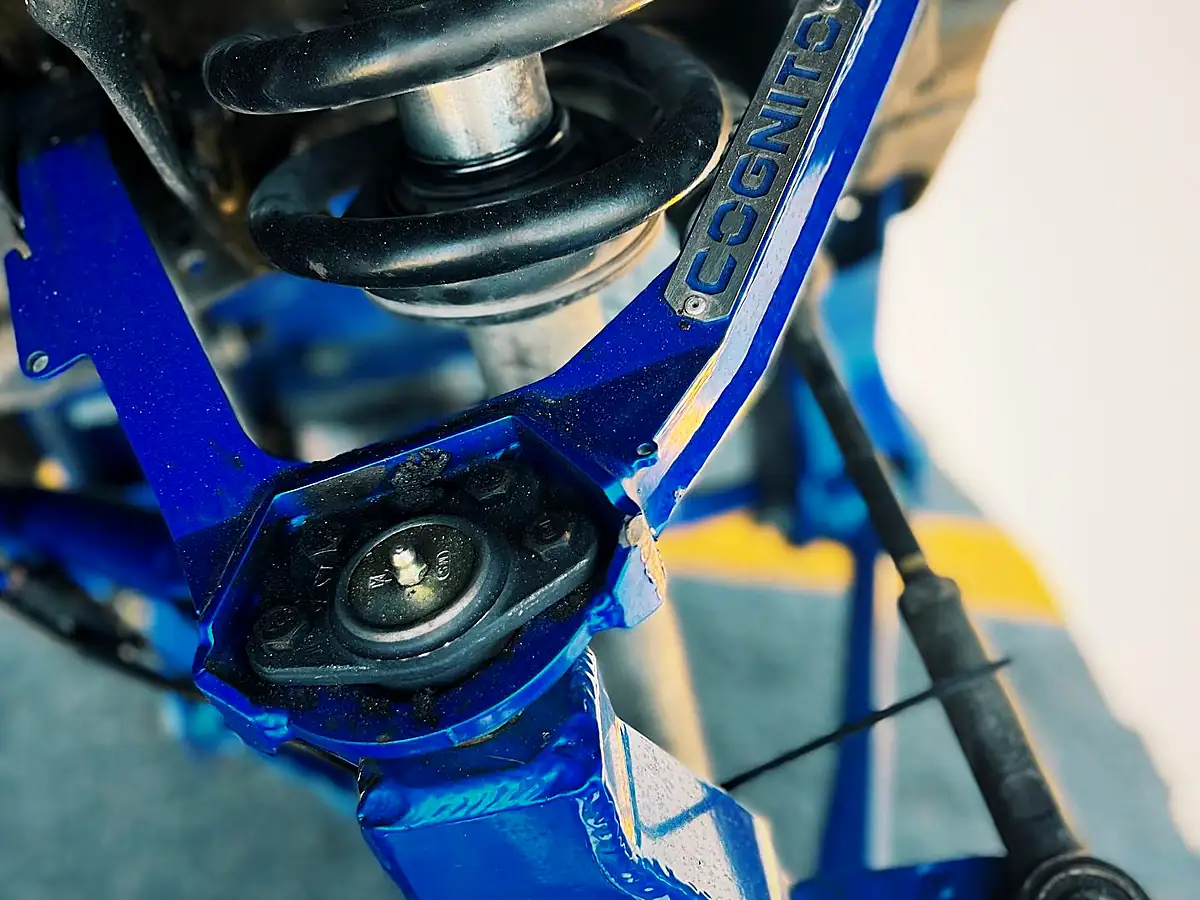
When to replace shocks and struts
Replace shocks and struts when an inspection finds leaks, weak damping, a damaged mount, or the bounce, dive and cupped wear above. Replace them in pairs, both fronts or both rears, so the two sides behave the same. After struts, get an alignment.
- Inspect yearly, and any time the truck is in for tires, brakes or an alignment.
- Look closely around 50,000 miles, sooner for towing and off-road use.
- Replace in pairs on the same axle.
- Align after struts, because the strut holds the wheel's position.
On lifted trucks, longer travel and heavier tires put more work on the shocks. If you're running a lift, the shocks that came with it are worth checking before the factory ones would have needed it. The rest of the front end matters too, which we cover in our suspension repair work.
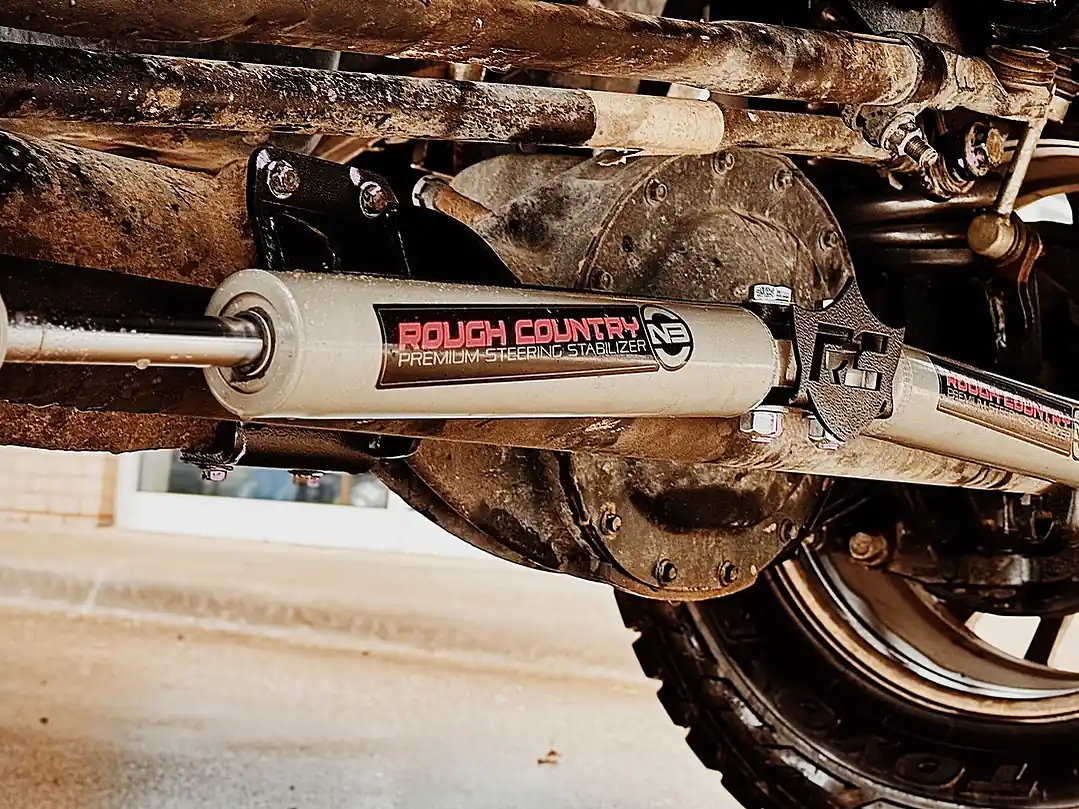
What we see under the truck
Worn shocks rarely travel alone. By the time a truck bounces, there's often a bushing, a ball joint or a sway bar link worn right along with them, because suspension parts work as one unit.
Chellcie Dean brought a truck with a history to our Tyler shop: "Struts and shocks were bad, control arm issues, ball joints and some bushings all needed replacing as well as the A arm that was darn near rubbing on my shocks!" And Zane, from our Longview reviews, came in for shocks on his truck and wrote that we did "a fantastic job trimming my truck so I wouldn't run anywhere and installing some shocks on my truck."
Shock and strut questions
Can I replace just one shock or strut?
Do I need an alignment after replacing struts?
How long does it take to replace shocks or struts?
Is it safe to drive with bad shocks?
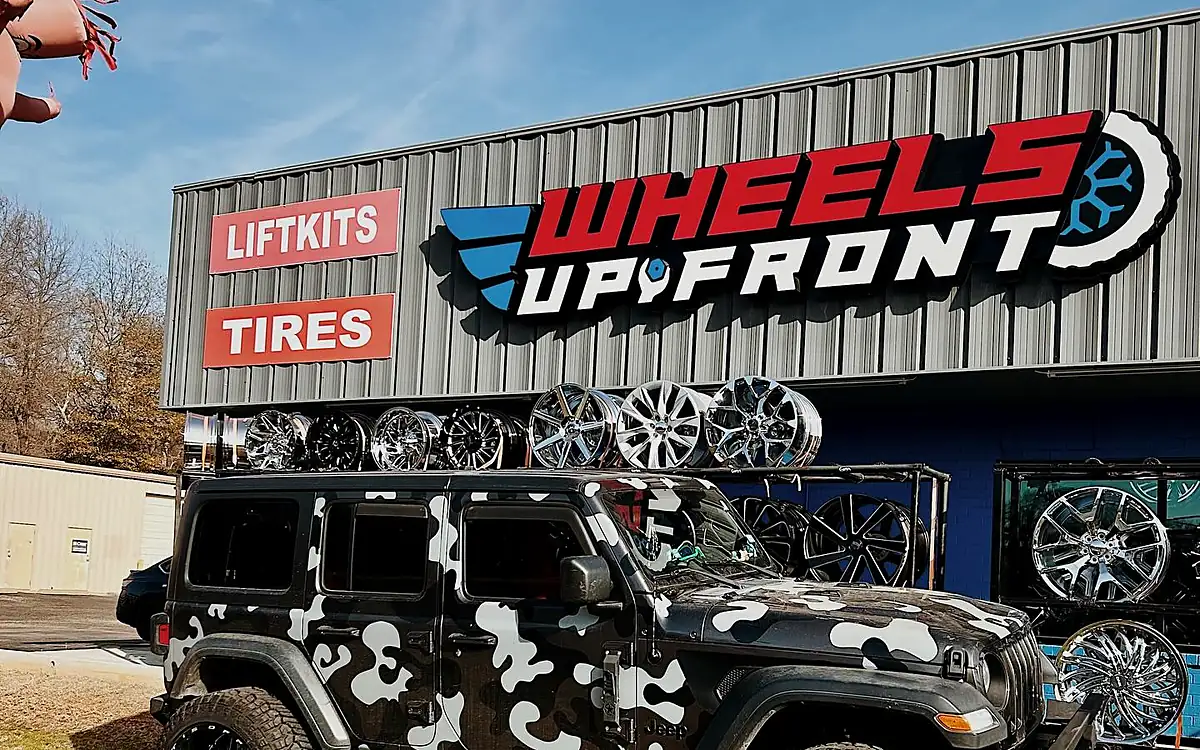
Bounce, dive or clunk? We inspect the whole front end and quote it before any work starts. See suspension repair in Tyler and Longview, or call Tyler at (903) 500-8557 or Longview at (903) 500-9626.