
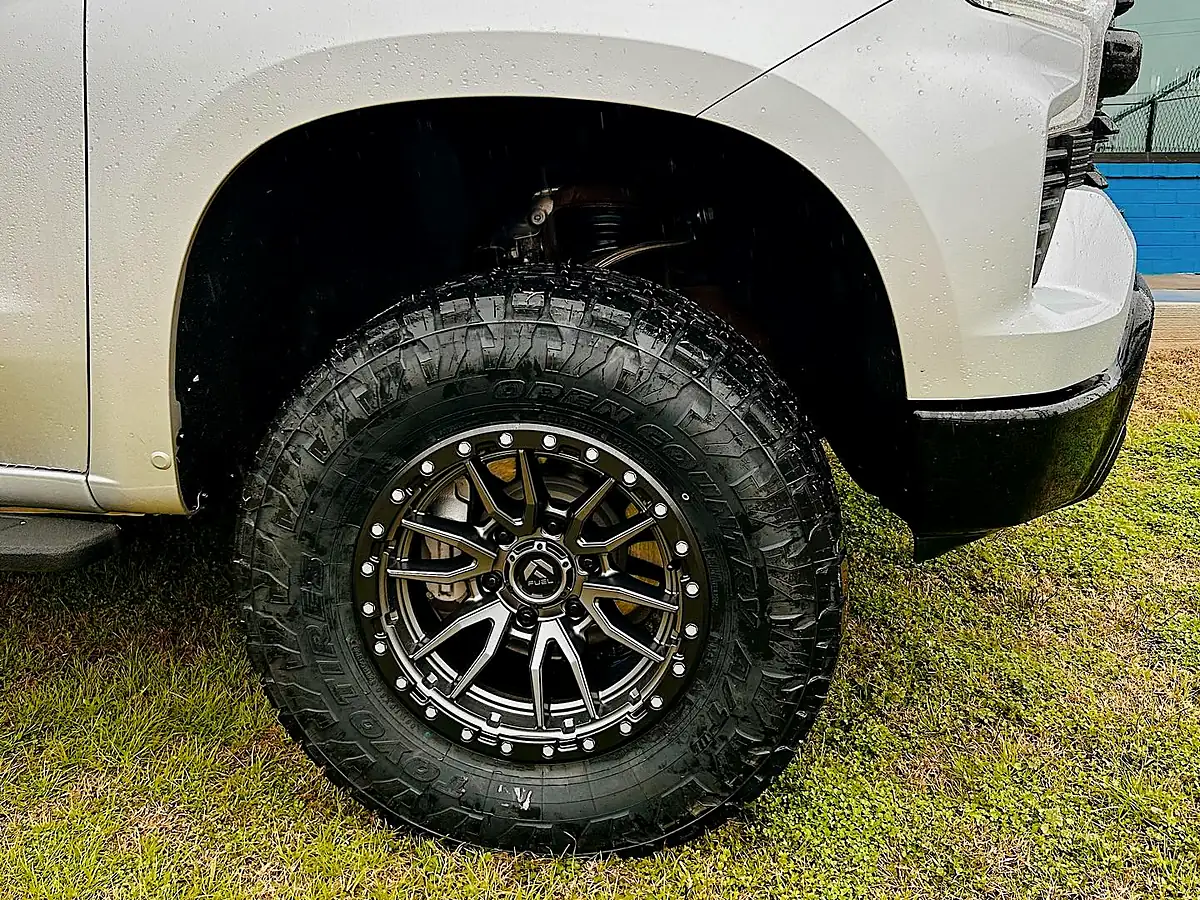
All terrain tires are built for mostly paved driving with some dirt, gravel and light mud. They're quieter, grip better on wet roads and usually last longer.
Mud terrain tires have big, open tread blocks that clear thick mud and grip loose ground, but they're louder on the highway and wear faster on pavement. If most of your miles are on pavement, pick all terrain. If you spend real time in deep mud, pick mud terrain.
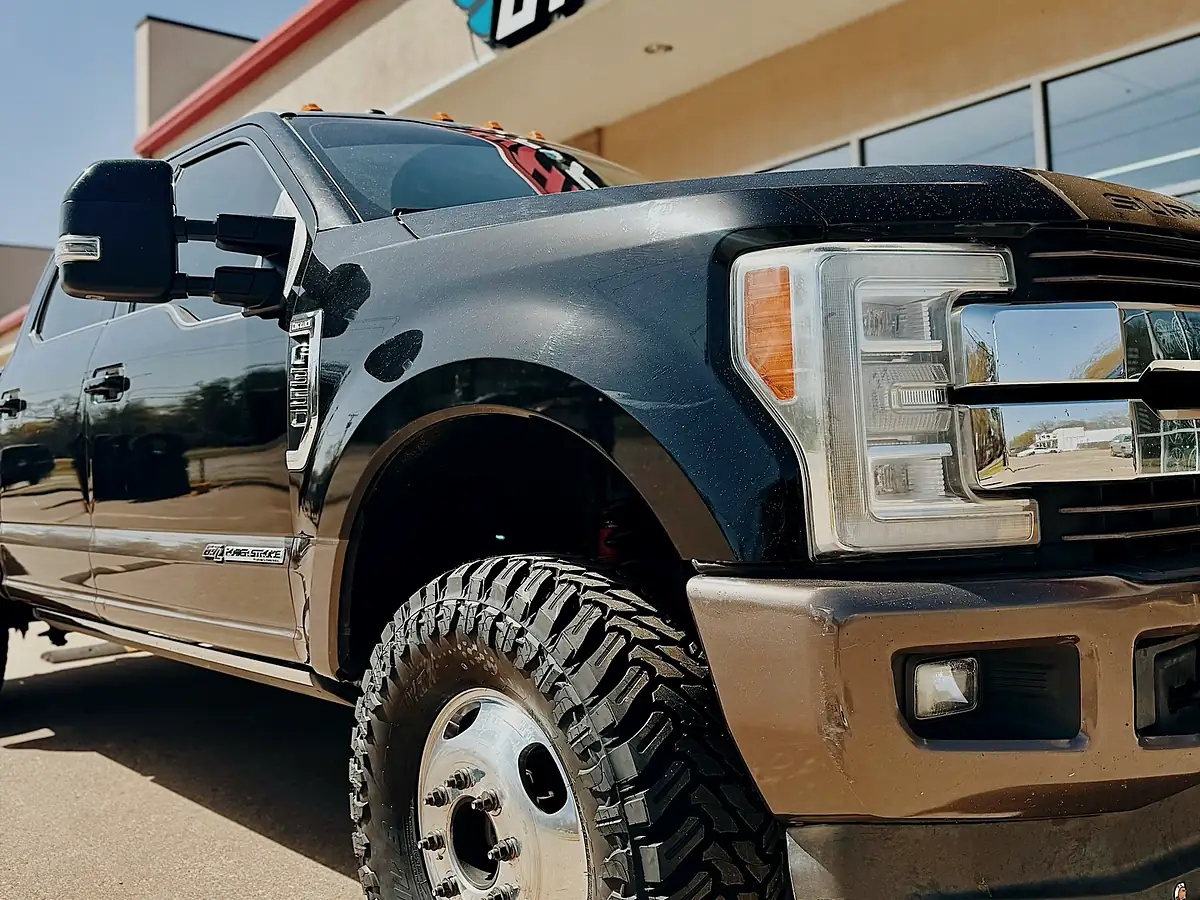
We mount and balance all terrain, mud terrain and hybrid tires from brands like Toyo, Nitto, Venom Power and Predator at our Tyler and Longview shops. The trucks below are ours.
Every week somebody walks into our Longview shop and asks for mud tires. Then I ask how often they drive in mud, and there's a long pause while they think about the one time in 2019. [putting the sales hat down for a second] Here's how to pick the tire you'll actually be happy with on a Tuesday, not just the one that looks good in the parking lot.
What's the difference between all terrain and mud terrain tires?
The difference is the tread. All terrain tires have tighter tread blocks with smaller gaps, so more rubber touches the road. Mud terrain tires have big blocks with wide gaps between them, so mud gets pushed out instead of packing in.
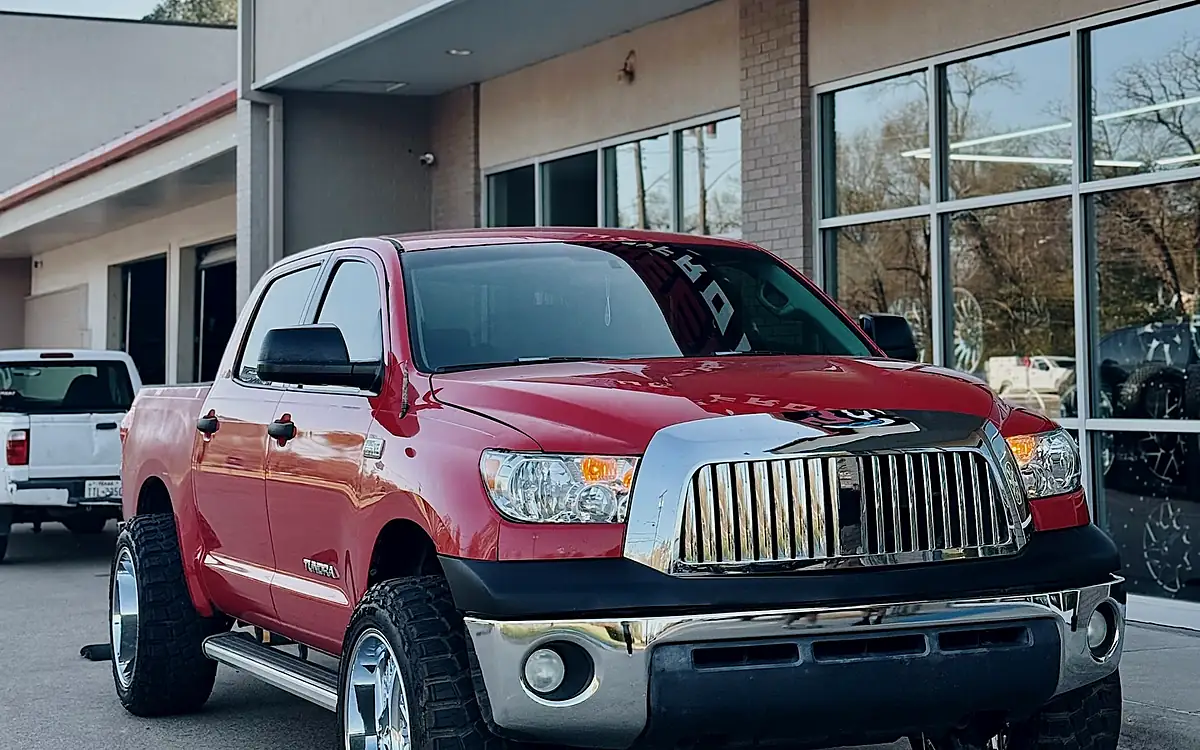
That one design choice drives everything else. More rubber on the road means a quieter ride, better wet grip and longer tread life. Wide gaps mean more bite in mud, and a highway hum you'll hear over the radio.
All terrain vs mud terrain, side by side
Here's how the two compare on the things people ask us about at the counter. This is general guidance, and every tire model lands a little differently.
| What matters | All terrain | Mud terrain |
|---|---|---|
| Tread design | Tighter blocks, smaller gaps | Big blocks, wide gaps |
| Highway noise | Quieter | Louder, a noticeable hum |
| Wet pavement | Better grip | Less rubber on the road |
| Deep mud | Fine in light mud | Built for it |
| Tread life on pavement | Usually longer | Usually shorter |
| Best for | Daily drivers that leave the pavement sometimes | Trucks that spend real time off-road |
Notice what's not on that list: looks. Mud terrains look mean, and I'll admit that's half of why people want them. There's no shame in it. Just know the hum is part of the package, like a dog that snores.
The in-between: hybrid tires
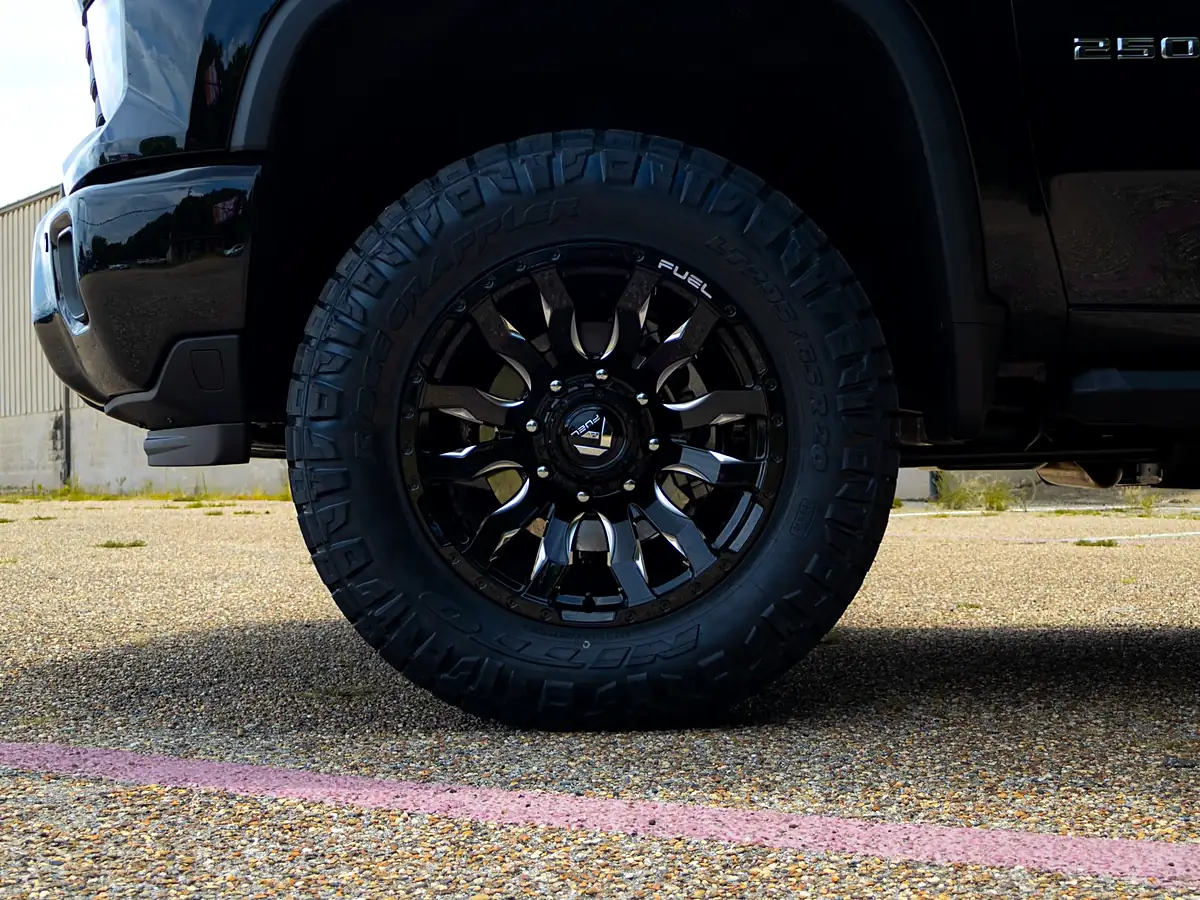
A hybrid tire, often called rugged terrain or R/T, sits between the two. It has more aggressive shoulders than an all terrain and a quieter center than a mud terrain.
The Nitto Ridge Grapplers on the Silverado 2500 below are a good example. You get some of the mud tire look and bite, without signing up for the full highway hum. For a lot of East Texas trucks, it's the "I want both" answer.
Which one fits East Texas driving?
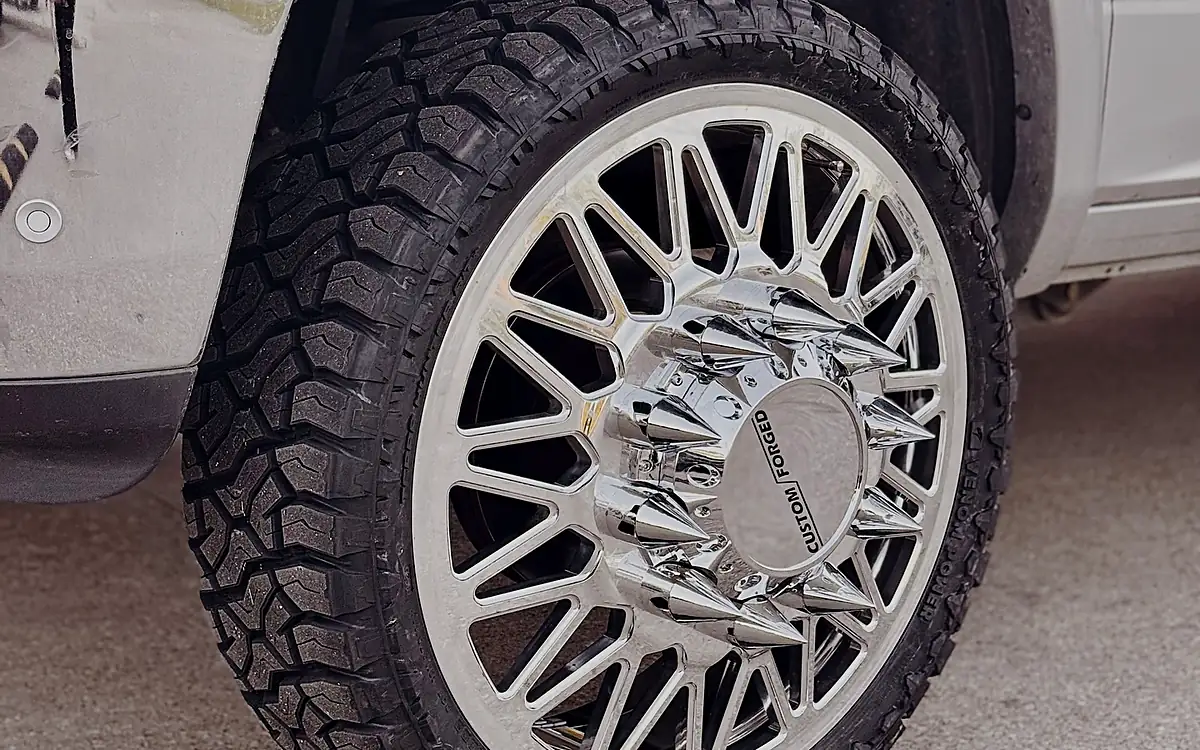
Be honest about where your miles go, then pick the tire for that. Not for the trip you might take someday.
- Mostly I-20, Loop 323 and the school run, with a gravel road now and then: all terrain. You'll get the quieter ride, better wet grip in a Texas downpour and longer tread life.
- Pasture, deer lease, oil field roads or red clay after rain, every week: mud terrain. That's what the open tread is for.
- A bit of both, and you want the look: a hybrid. It's the compromise most people are secretly shopping for.
Whatever you pick, run the same tire on all four corners and keep them rotated. Aggressive tread can wear unevenly if it's ignored, and we cover the timing in how often to rotate tires. When it's time to check what's left, here's how to check tire tread.
Not sure which tread fits your truck? Tell us how you drive and we'll price options side by side. See our tires in Tyler and Longview.
All terrain vs mud terrain questions
Are mud terrain tires bad on the highway?
Do mud terrain tires wear out faster?
Can all terrain tires handle mud?
What is a hybrid or R/T tire?
Can I mix all terrain and mud terrain tires?
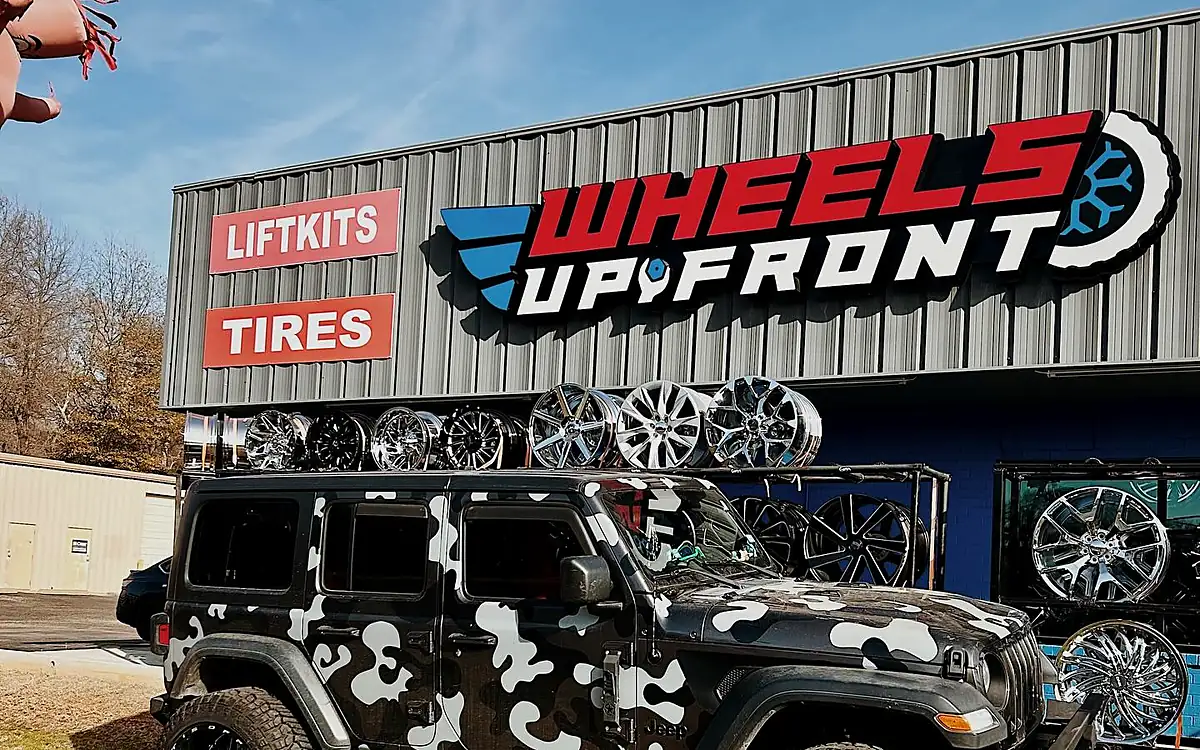
Ready for new tread? We carry 17 tire brands at both shops and mount, balance and torque a set in about an hour. See our tires in Tyler and Longview, or call Tyler at (903) 500-8557 or Longview at (903) 500-9626.
Read this next How to check tire tread